

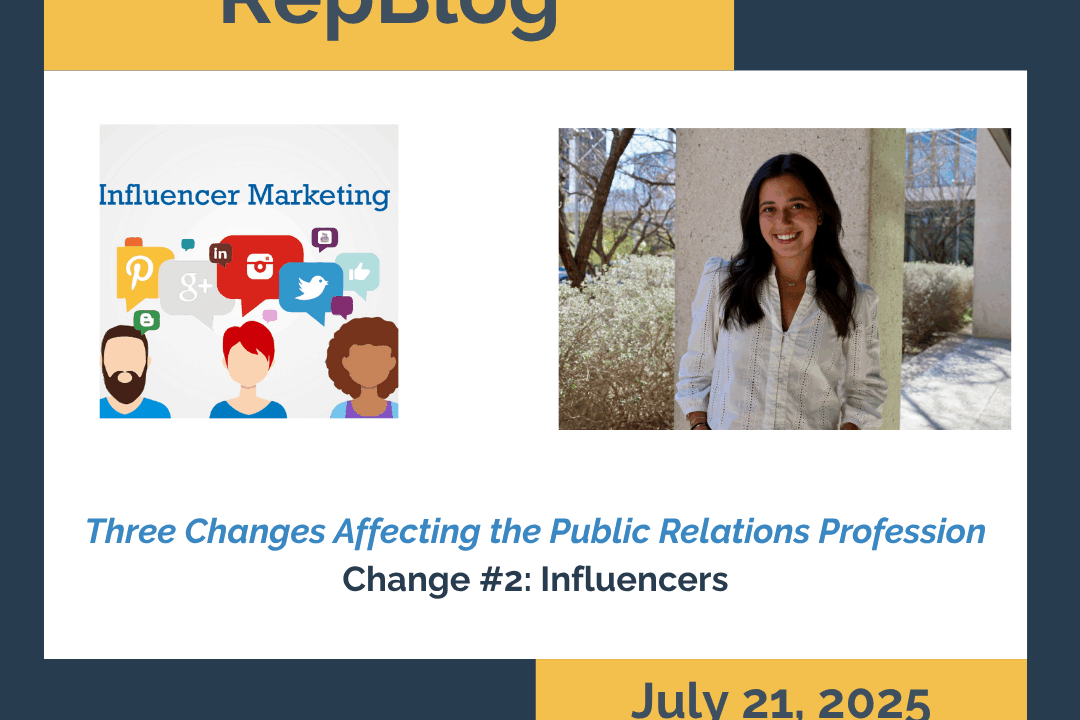
Welcome back to the special RepBlog series: “The RepUs Top 3 Changes Affecting the Public Relations Profession. In Part 1, we discussed the importance of authentic public relations amid increasing polarization and digital fatigue, and authenticity’s influence in the industry is nothing short of immeasurable. In fact, authenticity has ignited the topic of today’s blog, The Rise of Influencers.
Influencers
From product promotions to news updates, influencers are transforming PR as we know it — and it can all be traced back to authenticity.
Prohibition Public Relations explains in their recent article, “The Rise of Influencer PR: Are Influencers the New Press?” that influencers are cultivating greater brand credibility among rising media distrust. They attribute this to the deep connection between influencers and their audiences. Because audiences follow influencers they enjoy and find relatable, endorsements from their favorite social media personalities feel genuine and truthful.
Sprinklr, a customer experience software company, emphasizes this relatability, asserting that “audiences today prioritize authenticity over star power.” It comes with a shift from macro-influencing, with celebrities and social media powerhouses, to micro and nano-influencing. Micro-influencers have between 10,000 – 100,000 followers, while nano-influencers’ followings range from 1,000 to 10,000. These smaller audiences allow for simpler, targeted messaging from brands. And the data backs it up. 92% of consumers report trusting micro-influencer recommendations more than celebrity promotions, according to 5WPR.
Furthermore, these smaller influencers provide additional benefits aside from audience connection. They preserve the bottom line.
Joseph Hagan, founder and director of Streamline PR, explains that smaller influencers maximize PR budgets by being both accessible and affordable. Furthermore, these smaller investments yield groundbreaking returns. Recent research proves that nano-influencers produce 20x the ROI per dollar spent than large, macro-influencers.
Moral of the story: the smaller the BETTER.
So, how can companies begin to take advantage of these growing resources? Similar to Part 1 of the RepBlog series, the answer lies in alignment. While there is no universal influencer strategy, all sources and professionals point to a strategic cohesion between character, platform, and messaging goals.
An article by the Harvard Business Review identifies important steps in crafting an influencer strategy, as described by Bocconi University’s Maximilian Beichert. Below, we have highlighted what we believe to be the most notable.
The first—and arguably most crucial—part of the process identifies the campaign goals. Whether it is gaining viewers or leading to direct sales, this step may help decipher the ideal following counts for your potential influencers. Next, your company must determine its method of tracking sales and influence. This could be a discount code or affiliate link to prove a direct correlation between posts and purchases. Lastly, a successful company will focus on the recurring theme of authenticity. According to Beichart, “You need a bunch of small influencers with intimate groups that can promote your products in a trustworthy way.” From relatable language to honest reviews, focusing on authenticity before awareness is the key to a well-rounded influencer campaign.
There is no one-size-fits-all method to approaching the rise of influencers. While some PR campaigns will benefit from an A-List celebrity shout-out, others may depend on the humble words of an up-and-coming beauty, health, or parenting guru. Therefore, as we navigate a new, more personal age of public relations, the fate of our companies may lie in our ability to strategically incorporate influencers into PR campaigns.
While the revolving developments in the PR field may seem daunting, take solace in the fact that we are all in the same boat. In fact, after this series, you may even be a few waves ahead. Follow along as we dive into the influence (pun intended) of Artificial Intelligence on this ever-changing industry in the final part of this series.